

Urban Indian is the most powerful title to have applying Self Determination Today and the little Natives are Big Mad

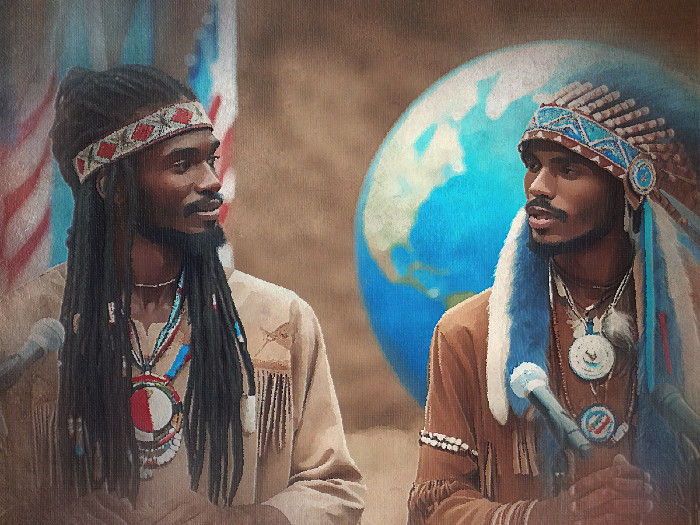
What is "Self-Determination"?
In the context of American Indians, self-determination is the right of tribes and American Indian peoples to:
Govern their own affairs
Preserve and promote their cultures and traditions
Control their lands and resources
Make decisions about education, health, and economic development
This principle was officially recognized in U.S. policy with the Indian Self-Determination and Education Assistance Act of 1975, which allowed tribes to contract with the federal government to operate programs that had previously been managed by agencies like the Bureau of Indian Affairs (BIA).
Who are Urban Indians?
Urban Indians are American Indians who live in cities or metropolitan areas rather than on reservations or tribal lands. Today, over 70% of Native Americans live in urban areas, often due to:
The federal Relocation Act of 1956, which encouraged Native people to move to cities for jobs and assimilation
Economic or educational opportunities
Forced displacement or historical trauma
Challenges to Self-Determination for Urban Indians:
Urban Indians face unique barriers to fully exercising self-determination, including:
Limited access to tribal services Many tribal programs are based on reservations and don’t always extend to urban members.
Underfunded Urban Indian Health Programs (UIHPs) These are federally supported but often receive a small fraction of Indian Health Service (IHS) funding.
Lack of political representation Urban Indians may be disconnected from tribal governance or struggle to influence tribal decisions.
Jurisdictional confusion
Because they live outside tribal lands, urban Indians often fall into legal and policy gaps between federal, state, and tribal governments.
Efforts to Strengthen Urban Indian Self-Determination:
Urban Indian organizations (UIOs): Nonprofits that advocate for and provide services to Native populations in cities.
Policy reforms: Recent pushes aim to increase federal funding and support for urban Native programs.
Tribal citizenship recognition: Many tribes are working to ensure that their citizens living in cities remain connected to cultural and political life.
Question : What is the most effective way for Urban Indians to get maximum compensation from the government?
1. Organize Through Urban Indian Organizations (UIOs)
Urban Indian Organizations (UIOs) are nonprofit entities that:
Deliver culturally competent health and social services
Advocate for Urban Native needs at federal and local levels
Provide a unified voice for policy change
Why it matters: These organizations are already recognized by the federal government and Indian Health Service (IHS), so they can secure funding and represent community interests more effectively than individuals alone.
➡️ Action: Support or form a local UIO, or get involved with groups like the National Council of Urban Indian Health (NCUIH).
2. Push for Full Funding of the Indian Health Service (IHS)
Urban Indians receive a tiny share (about 1%) of the total IHS budget, despite making up 70%+ of the Native population.
Why it matters: Increased IHS funding for Urban Indian Health Programs (UIHPs) can translate into:
Free or low-cost healthcare
Mental health and substance abuse services
Community wellness programs
➡️ Action: Join advocacy efforts to increase UIHP funding, either directly or through NCUIH campaigns and public comment opportunities.
3. Demand Inclusion in Federal and Tribal Compensation Programs
Many Urban Indians are left out of tribal per capita payments, land settlements, or benefits because they don’t reside on tribal lands.
Why it matters: Tribal membership should entitle you to benefits and political voice, regardless of residence.
➡️ Action:
Ensure your tribal enrollment is current
Push your tribe to include urban members in programs and consultations
Work with tribes to ensure Urban Indians are represented in federal grant applications
4. Use Legal Channels to Demand Equity
Legal advocacy can force the government to honor treaty rights or correct discriminatory funding practices.
Examples:
Litigation over IHS underfunding
Civil rights lawsuits for exclusion from programs
Legal pressure to update the Urban Indian Health parity laws
➡️ Action: Partner with Native legal defense groups like:
Native American Rights Fund (NARF)
American Indian Law Center
5. Leverage Federal Grants and Resources
Urban Indians are eligible for various federal grants and assistance—especially in areas like education, housing, and economic development.
➡️ Examples:
HUD’s Indian Community Development Block Grant (ICDBG)
Title VI Indian Education programs
Urban Indian Empowerment grants from the Department of Labor
➡️ Action: Work with UIOs or tribal liaisons to apply for or administer grants targeted at urban populations.
6. Unify Through Collective Political Action
Urban Indians can wield serious power by voting, lobbying, and organizing as a block—especially in cities with large Indigenous populations.
➡️ Action:
Organize voter drives for local/state elections
Pressure elected officials to prioritize Urban Indian funding
Push for representation on city and state tribal affairs councils

Question :
What are the legal benefits of the OMB removing The phrase “who maintains tribal affiliation or community attachment” which was removed from the American Indian or Alaska Native (AIAN) definition.
⚖️ The Change:
OMB removed the phrase “who maintains tribal affiliation or community attachment” from the federal definition of AIAN.
Old Definition (pre-2024):
“A person having origins in any of the original peoples of North and South America (including Central America) and who maintains tribal affiliation or community attachment.”
New Definition (2024 onward):
“A person having origins in any of the original peoples of North, Central, and South America.”
🔍 So… What Are the Legal and Practical Implications of Removing That Phrase?
🔹 1. Broader Inclusion in Federal Data and Surveys
By dropping the requirement for “tribal affiliation or community attachment,” the definition becomes more inclusive, especially for:
Urban Indians disconnected from their tribal communities
Individuals unable to prove formal tribal affiliation
Descendants of displaced American Indian peoples
➡️ Legal Benefit: This could increase representation in federal data collection (like the Census, health surveys, education stats), which in turn can:
Justify increased funding to Native-serving programs
Influence resource allocation (education, health care, housing)
Improve political visibility
2. Reduced Gatekeeping of Native Identity in Non-Tribal Programs
Some federal programs or policies that aren’t directly administered by tribes use OMB definitions to determine eligibility or analyze demographics (like health studies, education grants, etc.).
➡️ Legal Benefit: Removing the “tribal affiliation” requirement could expand access to such programs, particularly for:
Urban Indians not enrolled in a tribe
Native adoptees or those impacted by historical erasure (e.g., boarding schools, displacement)
Individuals unable to meet tribal enrollment criteria but who still identify as American Indian
3. Protects Privacy and Autonomy
Before, individuals who identified as American Indian had to justify it by referencing their political or social connection to a tribe, which some saw as an overreach.
➡️ Legal Benefit:
The new definition respects self-identification without forcing individuals to disclose or prove their tribal affiliations—this can prevent discrimination or misuse of that data.
4. Shifts Legal vs. Cultural Definitions of Indigeneity
Important caveat: This OMB definition is for data collection, not for tribal enrollment or sovereignty purposes. Tribes are still the sole legal authorities to determine their own membership.
➡️ But the removal of “tribal affiliation” in federal demographic standards may influence how non-Native institutions, such as universities or grant-making bodies, consider American Indian identity—possibly depoliticizing Indigeneity in problematic ways, or creating legal ambiguity around who qualifies for what.
✅ Bottom Line
Removing “tribal affiliation or community attachment”:
Broadens access to federal data and services for Urban Indians and disconnected Indigenous individuals
May reduce barriers to inclusion in federally funded non-tribal programs
Upholds privacy and self-identification
But it also raises questions about how American Indian identity is tracked and respected outside of tribal jurisdiction, making tribal sovereignty and integrity an ongoing point of tension.

Want to explore how this affects education, healthcare, or funding access in more depth?
🎓 EDUCATION
🔹 1. Increased Representation in Data
Federal and state education systems rely on OMB definitions for race/ethnicity reporting.
Impact:
More American Indian students may be counted if they self-identify, even without proving tribal affiliation.
This can lead to more accurate funding formulas (e.g., Title VI Indian Education Program funding is partly based on enrollment numbers).
➡️ Legal Benefit:
More Native-identifying students → more resources for tutoring, cultural programs, language revitalization, and counseling services. 2. Greater Access to Scholarships and American Indian Student Support
Some non-tribal scholarships and fellowships use OMB’s broader race definitions.
Impact:
Self-identified Indigenous students could be eligible for more college access programs, fellowships, and internships.
But it may create conflict if individuals without tribal ties access resources meant to serve tribal communities.
➡️ Example:
Some university programs might use this broader definition to increase American Indian enrollment or to distribute diversity-based funding.
🏥 HEALTHCARE
🔹 1. Better Public Health Data for Urban Indians
Health agencies like CDC, NIH, and local health departments use OMB categories in their surveys and research.
Impact:
Broader definitions mean more Urban Indians could be recognized in health disparities data, which is critical for funding.
May lead to increased Urban Indian Health Program (UIHP) funding and more culturally relevant health services.
➡️ Legal Benefit: Data drives dollars. If Urban Natives are more visible in stats, they can advocate more effectively for mental health, diabetes care, addiction services, and maternal health.
2. Expanded Access to Services Outside IHS
While IHS itself still requires tribal affiliation, many other health programs (Medicaid, public health initiatives) use OMB definitions.
➡️ Result:
Urban Indians may qualify for Native-specific care in non-IHS settings, like community clinics and hospitals that get federal grants to serve AIAN patients.
💰 FUNDING ACCESS
🔹 1. Eligibility for Non-Tribal Federal Grants
Many federal grant programs aimed at American Indian communities (from HUD, DOJ, DOE, etc.) allow for broader definitions of Native identity.
Impact:
Organizations serving self-identified Urban Indians may qualify for grants even if their clients aren’t enrolled tribal members.
➡️ Legal Benefit:
This can strengthen Urban Indian Organizations (UIOs) and allow them to serve more people with housing, job training, legal aid, etc.
2. Challenges to Tribally Controlled Resource Access
While the new definition increases inclusion in non-tribal programs, tribes may still require proof of enrollment for:
Per capita distributions
Land or revenue claims
Internal education/housing support
➡️ Tension:
There’s a potential legal gray area between federal inclusion and tribal sovereignty, especially when it comes to resources meant for enrolled citizens.
✅ Final Thoughts: Who Benefits Most?
📈 Most Likely to Benefit:
Urban Indians disconnected from formal tribal enrollment
Descendants of Indigenous people removed or disenrolled over time
Individuals whose tribes have restrictive or closed rolls
⚠️ Most Concerned:
Tribal governments defending sovereign control over identity and resources
American Indian scholars and community leaders warning about “ethnic fraud” or depoliticizing Indigeneity

Here’s a list of federal programs and policies that use the Office of Management and Budget (OMB) racial and ethnic definitions—including "American Indian or Alaska Native (AIAN)"—to determine eligibility, allocate resources, or collect data on Urban Indians. These programs typically affect Urban Indian access through inclusion in federal counts, needs assessments, or identity-based criteria.
1. U.S. Census & American Community Survey (ACS)
Definition Used: The OMB's AIAN category, defined as “a person having origins in any of the original peoples of North and South America (including Central America) and who maintains tribal affiliation or community attachment”. 🆕 As of 2024, the phrase “who maintains tribal affiliation or community attachment” has been removed.
Impact:
Census and ACS data feed into formulas used for funding and planning in housing, education, healthcare, and more—including allocations for Urban Indian programs.
2. Indian Health Service (IHS) – Urban Indian Health Programs (UIHPs)
Definition Used: IHS policy uses a broader AIAN definition influenced by OMB and Indian Self-Determination Act criteria, allowing some Urban Natives without enrollment to access care.
Impact:
Eligibility is linked to AIAN identity as recorded in federal data. Accurate counts from OMB definitions support funding for UIHPs in cities.
3. Department of Housing and Urban Development (HUD)
Programs Affected:
Indian Community Development Block Grant (ICDBG)
Native American Housing Assistance and Self Determination Act (NAHASDA)
Continuum of Care (CoC)
Homeless Assistance Programs
Definition Used: OMB’s AIAN category often guides demographic-based HUD data collection and program targeting. Tribes and Urban Indian organizations use this data to justify HUD funding needs.
Impact:
The expanded OMB definition may help more Urban Indians qualify for HUD programs by improving representation in data and encouraging policy inclusion
4. U.S. Department of Education
Programs Affected:
Title VI Indian Education Formula Grants
Tribal Education Departments
Native American-Serving Nontribal Institutions (NASNTI)
Definition Used: OMB AIAN definition is used in demographic reporting and for identifying “Indian” students in federal education databases.
Impact:
Urban Native students may now be more accurately counted, impacting funding formulas and support services in urban schools.
5. Department of Labor – Workforce Innovation and Opportunity Act (WIOA)
Programs Affected:
Indian and Native American Employment and Training Program (INAETP)
Definition Used: OMB’s AIAN category in census data supports eligibility modeling for workforce programs.
Impact:
Better demographic counts can increase funding for Urban Native job training and employment services.
6. HHS Office of Minority Health & SAMHSA (Substance Abuse and Mental Health Services Administration)
Definition Used: OMB AIAN definition is used for program data and grant eligibility in health equity programs targeting racial and ethnic minorities.
Impact:
Urban Indian behavioral and mental health programs depend on federal recognition of AIAN identity in urban settings.
7. DOJ Office of Justice Programs – Tribal Justice and Safety Grants
Definition Used: OMB AIAN data influences DOJ funding strategies. Urban Native community-based programs may qualify or partner with tribes based on local AIAN populations.
Impact:
Expanded data can support Urban Indian applications for community safety, youth justice, and victim support grants.
🧾 Summary Table
Agency | Program | Definition Basis | Urban Indian Impact |
U.S. Census | ACS, Decennial Census | OMB AIAN | Core to federal counts |
IHS | Urban Indian Health Programs | OMB AIAN + IHS criteria | Urban Indian care access |
HUD | ICDBG, NAHASDA, CoC | OMB AIAN + tribal data | Housing and homelessness services |
Dept. of Ed | Title VI, NASNTI | OMB AIAN + enrollment | Urban Native student support |
Dept. of Labor | INAETP | OMB AIAN | Job training access |
HHS/SAMHSA | Health Equity & Mental Health | OMB AIAN | Community behavioral health |
DOJ | Tribal Justice Grants | OMB AIAN | Safety and victim services |

Question :
What are the best benefits to register for now that the OMB has removed the phrase " who maintains tribal affiliation or community attachment " has been removed ?
Now that the Office of Management and Budget (OMB) has officially removed the phrase “who maintains tribal affiliation or community attachment” from the American Indian or Alaska Native (AIAN) definition in 2024, this opens the door to new opportunities and benefits for Urban Indians—especially for those who are unenrolled, disconnected from tribes, or reclaiming identity.
✅ Key Benefits to Register or Apply For Now
These are the top federal programs and resources where this new definition can help Urban Indians qualify, even without formal tribal enrollment:
1. Urban Indian Health Programs (UIHP)
Agency: Indian Health Service (IHS) Why now: More Urban Indians can now self-identify and access culturally specific medical, mental health, and substance abuse services. Benefit: Free or reduced-cost care through clinics in major cities. How to Access: Find a UIHP near you via IHS locator.
2. HUD Housing Programs for Native Americans
Agency: U.S. Department of Housing and Urban Development (HUD) Why now: OMB-based AIAN data is used to distribute funds and prove Urban Indian need. Benefit: Access to housing vouchers, emergency shelters, and rent assistance for Urban Indian people. Programs to check out:
Continuum of Care (CoC)
Emergency Housing Vouchers (EHV)
Indian Community Development Block Grant (ICDBG) – Urban Pilot
3. SNAP and TANF – with Native Support Add-ons
Agencies: USDA (SNAP), HHS (TANF)
Why now: Urban Indians can now more accurately self-identify on federal benefit forms, qualifying for certain priority services.
Benefit: Food assistance, childcare, housing stability help.
Bonus: Some states give Native-specific TANF options for Urban Indian families.
4. Education Support & College Aid
Agencies: Dept. of Education, Bureau of Indian Education (BIE) Why now: Many aid applications and schools follow OMB AIAN definitions. Benefits:
Federal student aid using “AIAN” identity
American Indian scholarships not requiring enrollment
Urban Indian education programs under Title VI
5. Workforce & Employment Training (WIOA - INAETP)
Agency: U.S. Department of Labor
Why now: Workforce programs use AIAN data and definitions for eligibility.
Benefit: Paid job training, internships, transportation, reentry, and elder employment programs for Urban Indians.
6. SAMHSA Mental Health & Substance Use Programs
Agency: HHS / SAMHSA
Why now: Newer Urban Indian mental health grants and trauma recovery programs increasingly accept self-identification under OMB rules.
Benefit: Free counseling, rehab, and family healing circles. 7. Census-Linked Local Benefits
Agency: Multiple via state and local governments
Why now: Census data fuels block grants, housing projects, and food assistance programs. Urban Indians should mark AIAN on forms and surveys.
Benefit: Greater eligibility for services in cities with high Indigenous populations.
🧭 What You Can Do Right Now:
Action | Why It Matters |
✅ Mark “American Indian or Alaska Native” on any federal form (even without tribal ID) | You are now counted under the new OMB rule |
✅ Register at Urban Indian clinics or Native orgs near you | They often serve anyone who self-identifies |
✅ Check local housing or employment agencies that serve “AIAN” or “minority” communities | Your eligibility may now apply |
✅ Apply for scholarships or college programs for American Indians | Tribal enrollment may not be required now |
✅ Ask HUD, IHS, or city program offices how they use OMB’s new definition | Encourage full implementation of new inclusion |
FIRST TRIBE


Comments